What is Neurofeedback?
Neurofeedback is a brain training exercise. The brain needs healthy amounts of
fast-moving and slow-moving brain waves in order for it to function in the most
optimum way. Neurofeedback, is a non-invasive treatment that works towards
improving the source of your unwanted symptoms. Neurofeedback therapy
measures your brainwaves and provides you with real-time feedback about how
the brain is functioning. Your brain observes itself and it directs itself to
increase self-regulation and relaxation– which are both very necessary for good
brain function. The technology helps the brain to become more adaptive and
efficient. It is completely painless and there are no electrical currents going
through a person’s brain. It is a gradual training/learning process.
The first step is to have an assessment, which can range from a very brief
assessment to a comprehensive one. This will help determine what type of
feedback you need and the areas of your brain that need improvement.
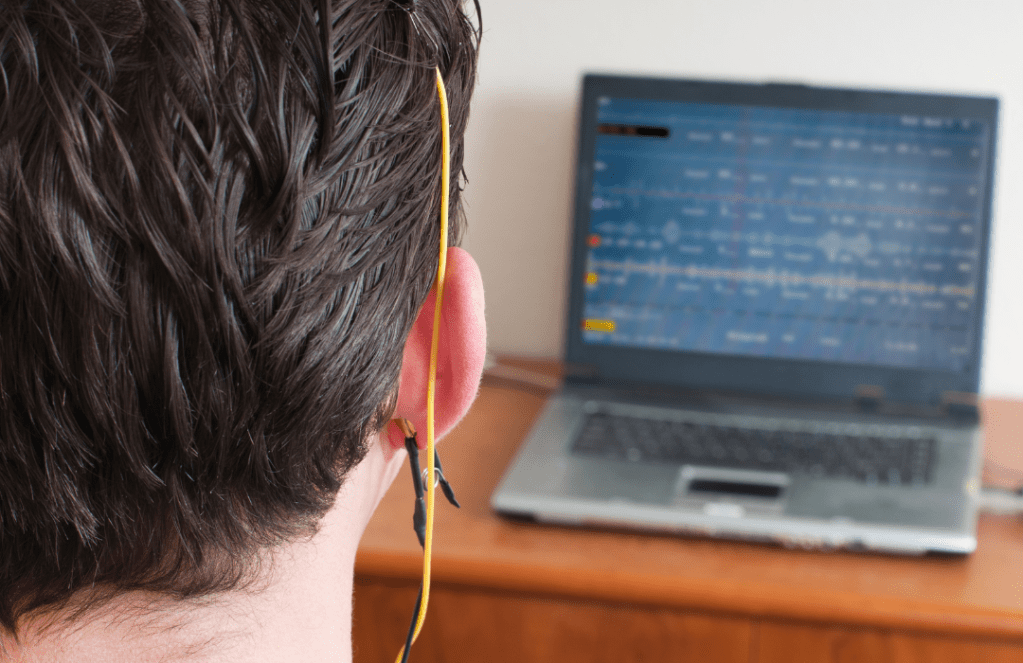
Most people find the experience to be very relaxing. You will be seated in a
comfortable chair with electrodes placed on your head. The therapist will ask
you to relax and watch a movie or listen to music while they monitor your brain
waves. When the session is complete, you can return to your normal activities.
There is no need for special preparation or aftercare.
How Does Neurofeedback Therapy Work?
It may take several months to see desired improvements, but there is no
consensus on how many sessions are needed before you can exert control over
your brainwaves. It is also unclear how long the therapy’s effects last without
ongoing treatment.
What to Expect from a Neurofeedback Therapy Session
Here’s how a neurofeedback therapy session may look.
- Neurofeedback therapy helps you with relaxation and emotion management
and regulation. - Similar to electroencephalography (EEG), neurofeedback therapy sessions
start by attaching electrodes to the designated sites on the scalp. The
electrodes’ locations that are placed on the scalp are unique to each individual.
These sensors detect the electrical signals produced by the brain and transmit
them to a computer. There are no needles or medications involved. - You could watch something on a screen, close your eyes and listen to audio or
engage in an activity like playing a video game. You may be lying down or sitting
up in a chair.
While you do this, your provider will be monitoring your brainwave activity and
will be asking you questions.
- Throughout the activity, you will receive cues as to how your brain is
performing. The goal is to remain in tune with your reactions. Sessions typically
last 45 – 55 minutes. - Results usually begin within 10 minutes. The most common neurofeedback
benefit is a gradual feeling of calm and peace. This will initially last from a few
hours to a few days. If there are no results after about three sessions, then
benefits will likely not occur. Even this “lack of a” result is in its own way, helpful
–time and money do not have to be needlessly spent. Brief sessions, tangible
results, and knowing quite quickly the effectiveness of the neurofeedback
therapy are all parts of its efficiency. Neurofeedback therapy can often take
between 20 – 30 sessions, the number of sessions will vary with each person.
The number of sessions you might need is a conversation to have with your
provider. Neurofeedback training sessions need to be regular and consistent, at
least twice per week. The number of sessions needed depends on the person’s
condition and goals for treatment.
Who can benefit from neurofeedback?
Individuals of any age can benefit from Neurofeedback therapy. Neurofeedback
can help a variety of childhood problems including bedwetting, nightmares,
attention deficits and other forms of disruptive and disturbing behaviors.
Neurofeedback can assist adolescents who struggle with anxiety and
depression or drug and alcohol use. For adults, neurofeedback can alleviate
symptoms of physical and emotional problems such as migraines or PTSD.
Neurofeedback can help anyone maintain good brain function as they age. Peak
performers also use Neurofeedback therapy to enhance their abilities in sports,
business and the arts.
Infra Low Frequency
Since its discovery in 2006, neurofeedback in the infra‐low frequency (ILF)
region of the EEG spectrum (below 0.1 Hz) has matured into a therapeutic
method applicable to the full spectrum of mental disorders. Pioneered by Sue
and Siegfried Othmer of EEGInfo, the Cygnet software we use to train these low
frequencies is the most widely used and technologically advanced in the
industry.
Deep within your brain are networks which communicate at extremely low
frequencies. They manage the second-by-second stability and flexibility of your
brain, the platform which determines your reactions to the outside world. If
those networks are not functioning well, you will exhibit the symptoms of that
dysregulation– sleepless nights, anxiety and depression, migraines, impulsivity,
compulsivity, and far more.
Rather than impose a predetermined outcome based on comparisons to other
brains, it is uniquely individual, informing the person of their own brain’s
internal activity and allowing it to take that information to make adjustments in
its own best performance. That is exactly how it is evolutionarily designed; it
just needs good information.
The technology is used to provide exactly that, your job as a client is to allow
your brain to witness its changing dynamics and make the corrections needed
for better function.
 Neurotherapy Clinic